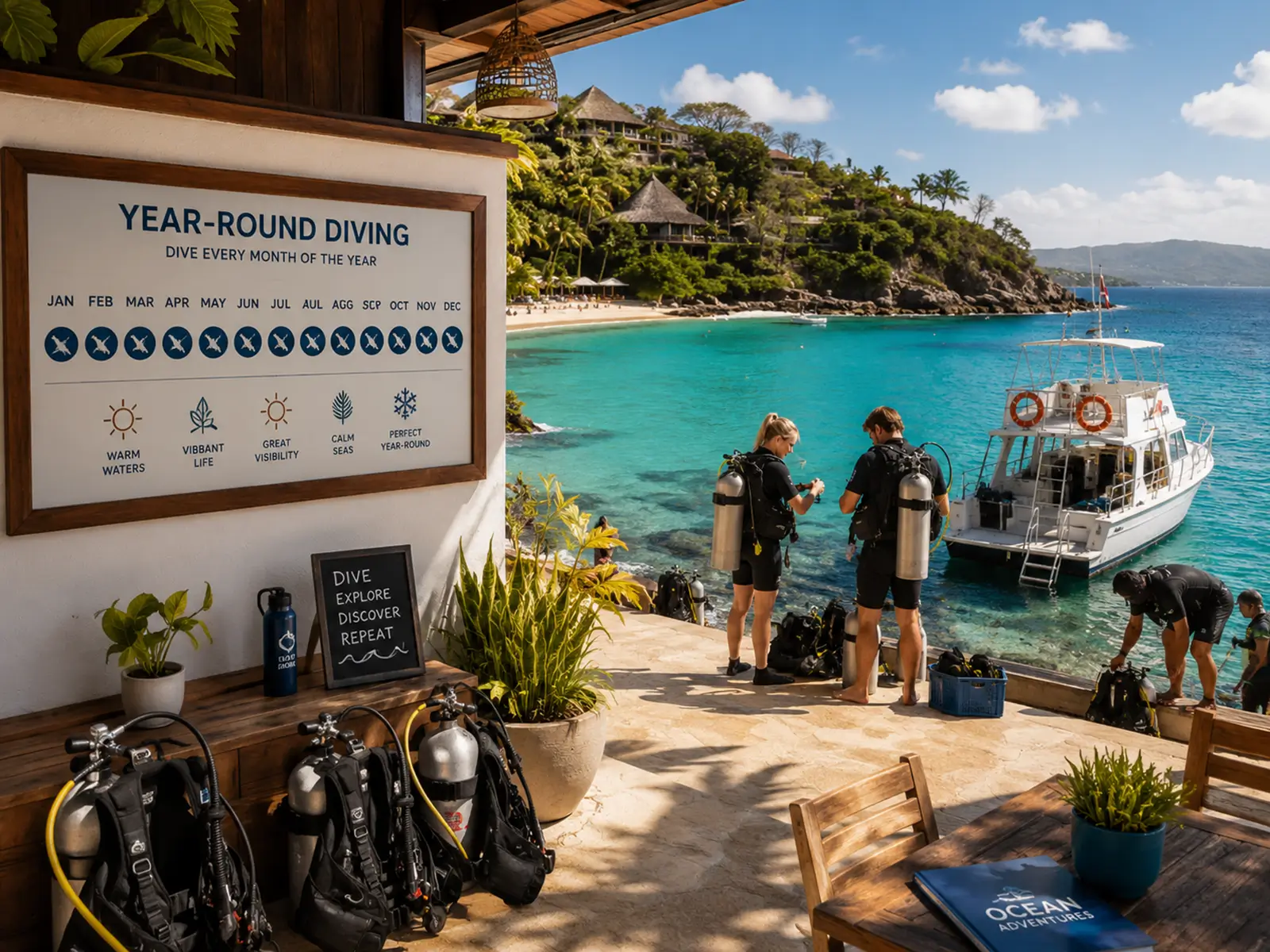
Year-Round Dive Destinations: What Buyers Should Know
For many buyers, a year-round dive destination sounds ideal.
Instead of depending on a short summer season, the business can operate for most or all of the year. In theory, that means more bookings, better cash flow, easier staff planning and a more stable lifestyle for the owner.
But year-round diving does not always mean year-round profit.
A destination may have warm water all year, but still have high and low seasons. Flights may change during the year. Weather may affect visibility or boat trips. Customer nationalities may shift by month. Some periods may be busy with tourists, while others depend mainly on local divers or repeat guests.
On "Dive Listings", buyers can compare dive centers and scuba businesses in different regions. If you are choosing between seasonal and year-round markets, it is important to look deeper than climate alone.
If you are still comparing regions, start with "best dive markets". This article focuses specifically on what buyers should know about year-round dive destinations.
1. Year-Round Diving Is Not the Same as Year-Round Demand
A destination may offer diving all year, but that does not mean customers arrive evenly every month.
There is a difference between:
Year-round diving conditions — the sea, weather and visibility allow diving through most of the year.
Year-round tourism demand — enough customers visit or live in the area to support the business every month.
A destination can have good diving conditions but weak off-season tourism. Another may have seasonal weather but strong domestic tourism during specific months.
Before buying, ask for monthly booking patterns, not only annual revenue.
You want to know:
- Which months are strongest
- Which months are weakest
- Whether the business closes at any time
- Whether staff levels change by season
- Whether prices change during the year
- Whether local divers support low season
- Whether courses continue outside peak months
A true year-round business should have a realistic plan for every part of the year, not only the best months.
2. Weather Still Matters
Warm destinations can still have weather risks.
Buyers should look at more than average temperature.
Important factors include:
- Wind patterns
- Rainy season
- Storm season
- Visibility changes
- Sea conditions
- Currents
- Water temperature
- Boat cancellation rates
- Access to protected dive sites
- Alternative shore diving options
A destination may technically be diveable all year, but if boat trips are often cancelled during certain months, revenue may still be seasonal.
This is especially important for boat-based businesses. A shore-based dive center with protected local sites may handle weather changes better than a business fully dependent on offshore trips.
When reviewing a year-round dive business, ask the seller how many operating days are usually lost because of weather.
That number can matter more than the phrase “open all year”.
 |
3. Customer Mix Can Change by Season
In year-round destinations, the type of customer may change during the year.
For example, one period may bring families and beginner divers. Another may bring experienced divers, digital nomads, retirees, local residents, cruise passengers or long-stay visitors.
A strong year-round dive business understands these customer groups and adjusts its offer.
Possible customer segments include:
- Beginner divers
- Certified recreational divers
- Local residents
- Repeat visitors
- Families
- Hotel guests
- Cruise passengers
- Underwater photographers
- Technical divers
- Snorkelers
- Freedivers
- Long-stay tourists
This matters because different customers buy different products.
Beginners may buy try dives and entry-level courses. Certified divers may book guided dive packages. Residents may want training, equipment servicing or regular club-style diving. Cruise visitors may book short, time-sensitive trips.
A destination is stronger when it can attract different customer types across the year.
4. Flights and Access Affect Stability
A year-round dive destination needs reliable access.
Even if the diving is excellent, the business may suffer if flights are limited, seasonal or expensive.
Buyers should check:
- Year-round flight connections
- Main source markets
- Ferry access, if relevant
- Cruise schedules
- Airport distance
- Hotel occupancy patterns
- Domestic tourism
- Changes between winter and summer routes
Some destinations are strong because they are easy to reach all year from major source markets. Others may depend on seasonal charter flights or a few airlines.
If access drops during certain months, dive center revenue may also drop.
For island businesses, this is especially important. Before buying, review "island dive markets" to understand how access and logistics can affect business value.
5. Year-Round Operations Can Mean Year-Round Costs
Operating all year can increase revenue opportunities, but it can also increase costs.
A seasonal business may close during quiet months and reduce expenses. A year-round business often keeps paying rent, staff, insurance, utilities, software, maintenance and marketing every month.
Buyers should compare revenue with fixed costs.
Important questions include:
- What are monthly fixed costs?
- Does the business need full-time staff all year?
- Can staff hours adjust in low season?
- Are boats maintained year-round?
- Is rent affordable during quiet months?
- Are marketing costs higher outside peak season?
- Is there enough working capital for weak months?
A year-round business is attractive only if the low-season revenue can support the cost structure.
Being open all year is not automatically better if the business loses money during several months.
 |
6. Low Season Strategy Is Critical
Even strong year-round destinations usually have quieter periods.
The best dive businesses do not simply wait for high season. They create a low-season strategy.
This may include:
- Local resident offers
- Specialty courses
- Professional-level training
- Equipment servicing
- Private guiding
- Photography trips
- Freediving sessions
- Snorkeling packages
- Group offers
- Club partnerships
- Low-season hotel partnerships
- Content marketing and SEO work
- Maintenance and staff training
Low season can also be used to improve the business, refresh equipment, update the website, train staff and prepare for peak demand.
A buyer should ask what the current owner does during quieter months.
If the answer is “nothing”, there may be room for improvement. If the business already has a strong low-season model, that can increase confidence.
7. Staff Planning Is Easier but Not Always Simple
Year-round destinations can make staff planning easier because the business may offer more stable work.
That can help retain good instructors, divemasters and front-desk staff.
However, year-round staffing also means year-round responsibility.
Buyers should check:
- Whether staff are full-time, part-time or freelance
- Whether instructors stay all year
- Whether local staff are available
- Whether work permits are needed
- Whether salaries are affordable in quiet months
- Whether the owner covers too many roles
- Whether burnout is a problem
A destination with year-round activity can be positive for staff retention. But if the business is always open and understaffed, the owner may become exhausted.
A sustainable year-round business needs the right staffing structure, not only constant demand.
8. Cash Flow Still Needs Careful Planning
Year-round dive destinations can offer smoother cash flow, but buyers should still review monthly numbers.
Annual revenue can hide weak months.
Ask for:
- Monthly revenue
- Monthly expenses
- Monthly profit
- Booking deposits
- Refund patterns
- Cancellation rates
- Staff costs by month
- Marketing spend by month
- Maintenance timing
- Tax payment timing
Cash flow is often more important than annual totals.
A business that earns money steadily across the year may be easier to manage. A business that earns most revenue in a few peak periods may need stronger reserves, even if it is technically open all year.
This connects with "dive center buying costs", because buyers need enough working capital after takeover.
 |
9. Year-Round Markets Can Be More Competitive
Attractive year-round destinations often attract many operators.
More customers may also mean more competition.
Buyers should study:
- Number of dive centers nearby
- Price levels
- Review quality of competitors
- Hotel partnerships
- Online visibility
- Course pricing
- Boat trip availability
- Niche opportunities
- Market saturation
A competitive market is not always bad. It can prove strong demand. But a buyer needs a clear reason why customers will choose their business.
That reason may be location, reviews, staff, language, niche diving, better website, stronger service, better boats or specialized courses.
In year-round markets, standing out matters.
10. Best Types of Year-Round Dive Businesses
Some business models work especially well in year-round destinations.
Examples include:
- Dive centers with both tourists and local customers
- Training-focused dive schools
- Dive shops with equipment sales and servicing
- Centers with strong direct bookings
- Businesses with multilingual marketing
- Operations near hotels or long-stay tourism areas
- Dive centers offering snorkeling, freediving or specialty courses
- Businesses with protected dive sites and weather alternatives
The strongest year-round businesses usually do not depend on only one product or one customer type.
They have several ways to generate revenue across the year.
11. Questions to Ask Before Buying
Before buying in a year-round dive destination, ask the seller:
- Which months are strongest?
- Which months are weakest?
- How many days are lost to weather?
- Does the business close at any time?
- What percentage of customers are tourists?
- What percentage are local or repeat customers?
- Which nationalities are most common?
- Are flights stable throughout the year?
- How does pricing change by season?
- How does staffing change by season?
- What are the fixed monthly costs?
- What is the low-season strategy?
- What marketing works outside peak months?
Good answers will show whether the business is genuinely stable or only marketed as year-round.
Final Thoughts
Year-round diving can make a dive business more attractive, but buyers should not assume it automatically means steady profit.
The strongest year-round destinations combine good diving conditions with reliable tourism demand, manageable weather, stable access, diversified customers and realistic operating costs.
A buyer should look at monthly numbers, not only annual revenue. They should understand low season, customer mix, staff planning, fixed costs and cash flow before making an offer.
A year-round dive destination can be a great market when the business model matches the demand.
But the real question is not whether diving is possible all year.
The real question is whether the business can operate profitably across the year.
Next Steps for Buyers
If you are comparing regions, start with "best dive markets".
If you are considering an island location, read "island dive markets" before making a decision.
If you want less obvious opportunities, explore "emerging dive destinations".
If you are still learning the buying process, read "how to buy a dive center".
If you are ready to compare real opportunities, browse current "dive centers for sale" on "Dive Listings".
You can also explore more guides in our "Dive Destinations & Market Guides" section.
 |