How to Sell Professional Dive Equipment Online
Selling dive equipment online can be a good way to recover value from used gear, upgrade a rental fleet or close part of a scuba business.
But professional dive equipment is different from ordinary second-hand items.
Buyers are not only looking for a low price. They want to know whether the equipment is safe, complete, serviceable, clean and suitable for business use.
A strong listing can help you attract serious buyers faster. A weak listing can create doubts, questions and price negotiation, even when the equipment is good.
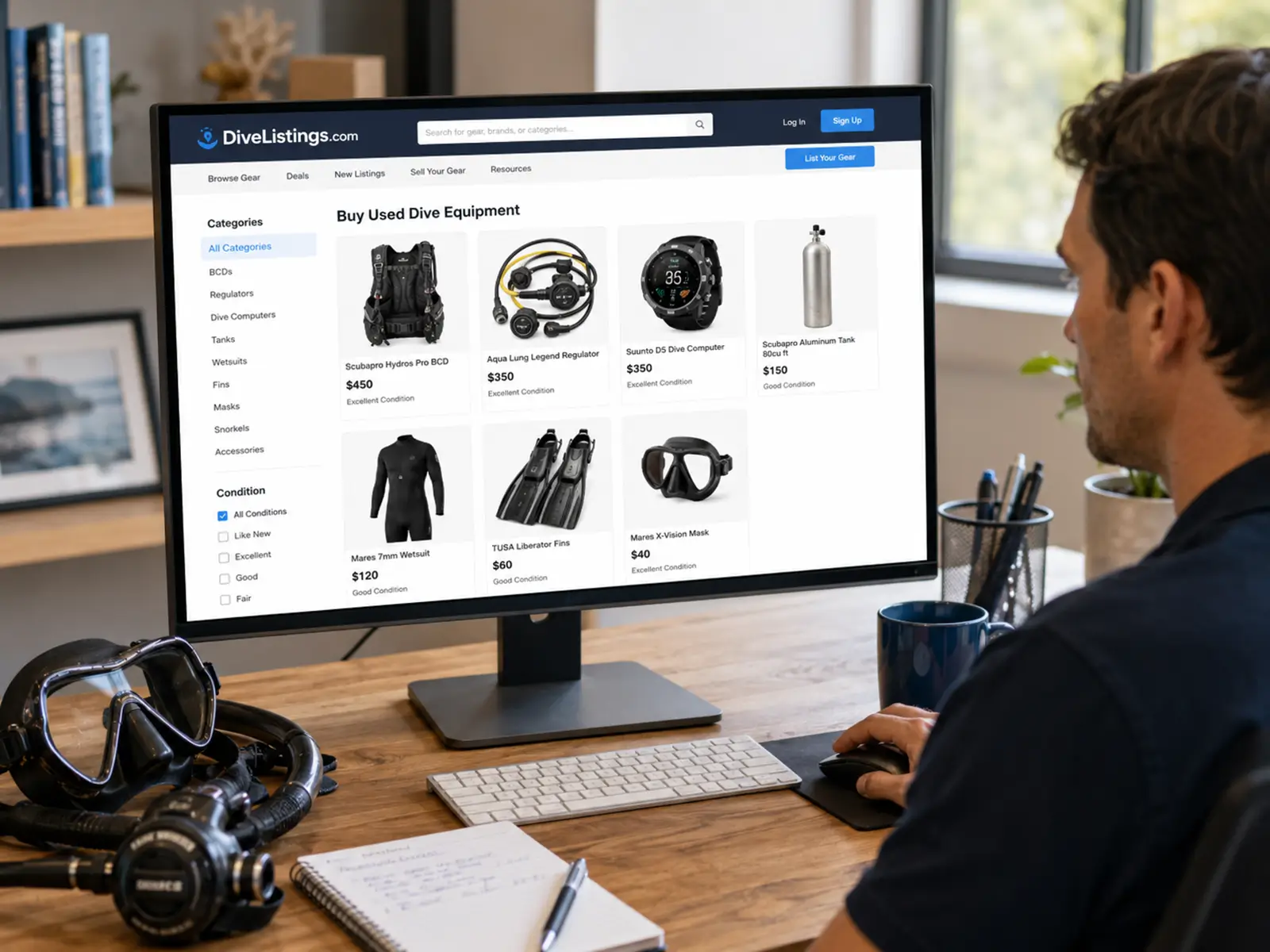
On "Dive Listings", sellers can list professional scuba equipment, dive businesses, boats and other dive-related opportunities. This guide explains how to prepare and present dive equipment properly before publishing a listing.
If you are buying instead of selling, start with "buy used dive equipment". This article focuses on the seller’s side.
1. Start With a Clear Inventory
A serious equipment listing starts with a clear inventory.
Do not describe everything only as “complete dive equipment” or “full rental fleet”. Buyers need details.
Prepare a written list showing:
- Item type
- Brand
- Model
- Size
- Quantity
- Age, if known
- Condition
- Last service date
- Included accessories
- Missing parts
- Known issues
For example, instead of writing:
“20 regulators for sale”
write something more useful:
“20 regulator sets, including first stage, second stage, octopus, SPG and hoses. Mixed models, last serviced between 2023 and 2025. Full list available.”
A clear inventory saves time and makes the listing look more professional.
2. Separate Equipment by Category
Buyers understand listings faster when equipment is organized by category.
Group the items clearly, such as:
- Regulators
- BCDs
- Wetsuits
- Tanks
- Dive computers
- Masks
- Fins
- Boots
- Weights
- Training equipment
- Spare parts
- Storage racks or boxes
This is especially important when selling a large package.
A buyer should be able to quickly see whether the package fits their needs.
For example, a dive center owner may care most about BCD sizes, regulator condition and tank inspection dates. A new operator may want to know how many complete rental sets can be created from the package.
Organized information makes the sale easier.
3. Be Honest About Condition
Condition is one of the most important parts of a dive equipment listing.
Do not oversell old gear as “excellent” if it is only usable.
Use clear condition descriptions such as:
- New
- Like new
- Very good
- Good used condition
- Working but needs service
- Needs repair
- For parts only
Honesty builds trust.
If a BCD has small wear, say so. If a wetsuit zipper is weak, mention it. If a regulator has not been serviced recently, explain that clearly.
Serious buyers expect used equipment to have wear. What they do not like is discovering problems after asking basic questions or inspecting the gear.
A transparent listing can still sell well if the price matches the condition.
4. Include Service Records
Service history can increase buyer confidence.
This is especially important for:
- Regulators
- BCD inflators
- Tanks
- Tank valves
- Dive computers
- Compressors
- Fill station components
If you have service records, mention them in the listing.
Useful information includes:
- Last service date
- Service provider
- Parts replaced
- Inspection date
- Hydrostatic test date
- Visual inspection date
- Air quality test, if relevant
- Known maintenance schedule
If you do not have records, be honest.
You can write:
“Working when last used, but no recent service records available. Buyer should inspect and service before commercial use.”
That is much better than ignoring the issue.
Professional buyers understand that used equipment may need service. They just want clarity before making an offer.

5. Show Sizes Clearly
Sizing is critical for dive equipment.
A package may look large, but if the sizes are not useful, the value may be lower.
For BCDs, wetsuits, boots and fins, include size information clearly.
For example:
- BCDs: 3 XS, 5 S, 8 M, 6 L, 2 XL
- Wetsuits: 5 mm, mixed adult sizes
- Boots: sizes 36–46
- Fins: mixed open-heel sizes
This helps buyers understand whether the equipment fits their customer base.
A dive center focused on families may need small sizes. A cold-water operator may need thicker suits. A tropical rental fleet may value lighter wetsuits and many average sizes.
Good size information reduces unnecessary questions and makes your listing stronger.
6. Explain Whether Items Are Sold Individually or as a Package
Some buyers want a full package. Others only want specific items.
Make your selling format clear.
You can offer:
- Full package only
- Individual items only
- Package preferred, individual sale possible
- Minimum order quantity
- Separate lots by category
For larger equipment packages, a full sale may be easier for the seller. But selling individually may achieve a higher total price if you have time and patience.
Be clear from the beginning.
If you do not want to split the package, say so. If you are open to splitting, explain which items can be separated.
This avoids wasting time with buyers who have different expectations.
7. Take Useful Photos
Photos are one of the strongest parts of an equipment listing.
Good photos should help buyers understand condition, quantity and organization.
Take photos of:
- Full equipment package
- Each category separately
- Regulators close up
- BCD front and back
- BCD inflators and dump valves
- Tank markings
- Tank valves
- Wetsuit zippers and seams
- Dive computer screens
- Size labels
- Service stickers or inspection dates
- Any damage or wear
- Accessories included
Use clean, well-lit photos.
Do not photograph equipment in a messy pile if you want a professional price.
A tidy presentation makes the gear look better and gives buyers confidence that it has been stored properly.
8. Do Not Hide Damage
If there is damage, show it.
This may feel uncomfortable, but it protects both sides.
Examples include:
- Tears in wetsuits
- Worn BCD straps
- Broken buckles
- Cracked mask skirts
- Scratched computer screens
- Corrosion on tanks
- Damaged hoses
- Missing weight pockets
- Weak zippers
- Leaking inflators
- Old mouthpieces
A buyer may still purchase the item if the price is fair.
Hidden damage creates distrust and can cause disputes later.
Professional buyers prefer honest listings because they can calculate repair and replacement costs properly.
 |
9. Price Equipment Realistically
Pricing used dive equipment can be difficult.
Many sellers price based on what they paid new. Buyers price based on current condition, service needs and remaining useful life.
When setting a price, consider:
- Original purchase price
- Age
- Condition
- Service history
- Brand support
- Demand for the item
- Completeness
- Size usefulness
- Immediate repair costs
- Transport costs
- Whether the buyer is purchasing in bulk
A regulator set with recent service records is worth more than one with unknown service history.
A clean, balanced rental fleet is worth more than random mixed gear.
A large package may need a discount because the buyer takes more risk and may need to service many items at once.
Fair pricing attracts serious buyers.
10. Explain Why You Are Selling
Buyers often want to know why the equipment is for sale.
A clear reason can build trust.
Common reasons include:
- Rental fleet upgrade
- Dive center closing
- Business model change
- Surplus equipment
- Retirement
- Relocation
- Seasonal fleet reduction
- Equipment replaced by newer models
You do not need to share private details, but a simple explanation helps.
For example:
“We are upgrading our rental fleet and selling older but serviceable equipment.”
or:
“Equipment from a dive center closure. Most items were in use until the end of the season.”
A clear reason for sale makes the listing feel more credible.
11. Mention What Is Ready to Use and What Needs Service
Buyers need to know what can be used immediately and what needs work.
Separate the equipment into practical groups:
- Ready to use after inspection
- Needs normal service
- Needs repair
- For spare parts
- Not tested recently
This helps buyers calculate the real value.
For example:
“Regulators were working when last used, but they should be serviced before commercial rental use.”
or:
“BCD fleet is usable, but several units need inflator servicing.”
Clear information reduces negotiation because buyers can see that the price reflects the condition.
12. Highlight Business Usefulness
If the equipment is suitable for business use, explain why.
Examples:
- Good size range for rental fleet
- Simple models suitable for beginners
- Durable school equipment
- Multiple matching regulator sets
- Recently serviced tanks
- Gear suitable for warm-water operations
- Equipment from an active dive center
- Useful for startup dive business
- Good backup or spare rental gear
A buyer is not only buying objects. They are buying practical capacity.
Help them understand how the equipment can support a dive business.
For example:
“This package can create approximately 12 complete recreational rental sets, depending on wetsuit sizing.”
That kind of information is very useful.
 |
13. Include Location and Transport Details
Dive equipment can be bulky, heavy and expensive to ship.
Location matters, especially for tanks, weights, BCDs and large packages.
Mention:
- Country
- Region or island
- Pickup options
- Shipping availability
- Pallet shipping possibility
- Whether buyer arranges transport
- Approximate number of boxes
- Weight or volume, if known
- Whether international shipping is possible
If tanks or weights are included, shipping costs may be high.
A buyer may be very interested until transport costs make the deal less attractive.
Clear logistics information saves time.
14. Avoid Contact Details in the Description
When selling on a marketplace, avoid putting direct contact details inside the public description if the platform does not allow it.
Do not include:
- Phone numbers
- Email addresses
- Website links
- Social media handles
- WhatsApp numbers
Use the platform’s enquiry system instead.
This protects the listing, keeps communication organized and helps buyers contact you properly through the marketplace.
On "Dive Listings", sellers should keep descriptions professional and use the platform’s built-in contact process.
15. Prepare Answers Before Buyers Ask
Serious buyers will usually ask detailed questions.
Prepare answers in advance for:
- Is the equipment still available?
- Can I buy only part of the package?
- When was it last used?
- Are service records available?
- Are regulators serviced?
- Are tanks in test?
- Do BCDs hold air?
- Are wetsuits clean?
- Are there any known defects?
- Can I inspect before buying?
- Can you ship?
- Is the price negotiable?
- Why are you selling?
Good preparation makes you look professional and can speed up the sale.
16. Common Mistakes to Avoid
Many dive equipment listings fail because they are too vague.
Avoid these mistakes:
- No inventory list
- Poor photos
- No sizes
- No service information
- No condition details
- Overpricing old gear
- Hiding damage
- Mixing usable and broken items without explanation
- No location details
- No transport information
- Saying “perfect condition” without proof
- Describing everything as “professional” without details
A professional listing does not need to be complicated.
It just needs to be clear, honest and useful.
 |
17. When to Sell as a Package
Selling as a package can make sense when:
- You are closing a dive center
- You are selling a full rental fleet
- You want a faster transaction
- The equipment works well together
- The sizes are balanced
- The buyer is likely to be another business
- Transport can be arranged efficiently
A package can be attractive for someone starting or expanding a dive operation.
But the price must reflect that the buyer may need to inspect, clean, service and transport everything.
A full package price should usually be more attractive than buying each item separately.
18. When to Sell Separately
Selling separately may make sense when:
- Some items are much more valuable
- The package is mixed
- Buyers want specific gear
- You have time to manage multiple sales
- Transport is easier item by item
- Regulators, computers or tanks have strong individual demand
Selling separately may bring more money, but it also takes more time.
For busy sellers, one good package buyer may be better than many small transactions.
Choose the method that fits your goal.
Final Thoughts
Selling professional dive equipment online is easier when the listing is clear, honest and well organized.
Buyers want to know exactly what is included, what condition it is in, when it was last serviced, which sizes are available and whether the equipment is suitable for business use.
A strong listing should include a detailed inventory, useful photos, service information, condition notes, size details, location, transport options and a realistic price.
Do not hide defects or overstate the value of old gear.
Serious buyers are usually willing to consider used equipment when they can understand the real condition and calculate any service or repair costs.
The best dive equipment listings build trust before the first message.
Next Steps for Sellers
Before publishing your listing, prepare a full inventory and take clear photos of each equipment category.
If you are buying instead of selling, read "buy used dive equipment".
To understand how rental gear affects business value, review "dive equipment rental fleet".
For air systems and compressor-related equipment, read "compressors and fill stations".
If you are selling a full scuba operation, start with "how to sell a dive center".
If you are ready to list your equipment, publish your "dive equipment for sale" listing on "Dive Listings".
You can also explore more guides in our "Dive Equipment Business" section.
 |