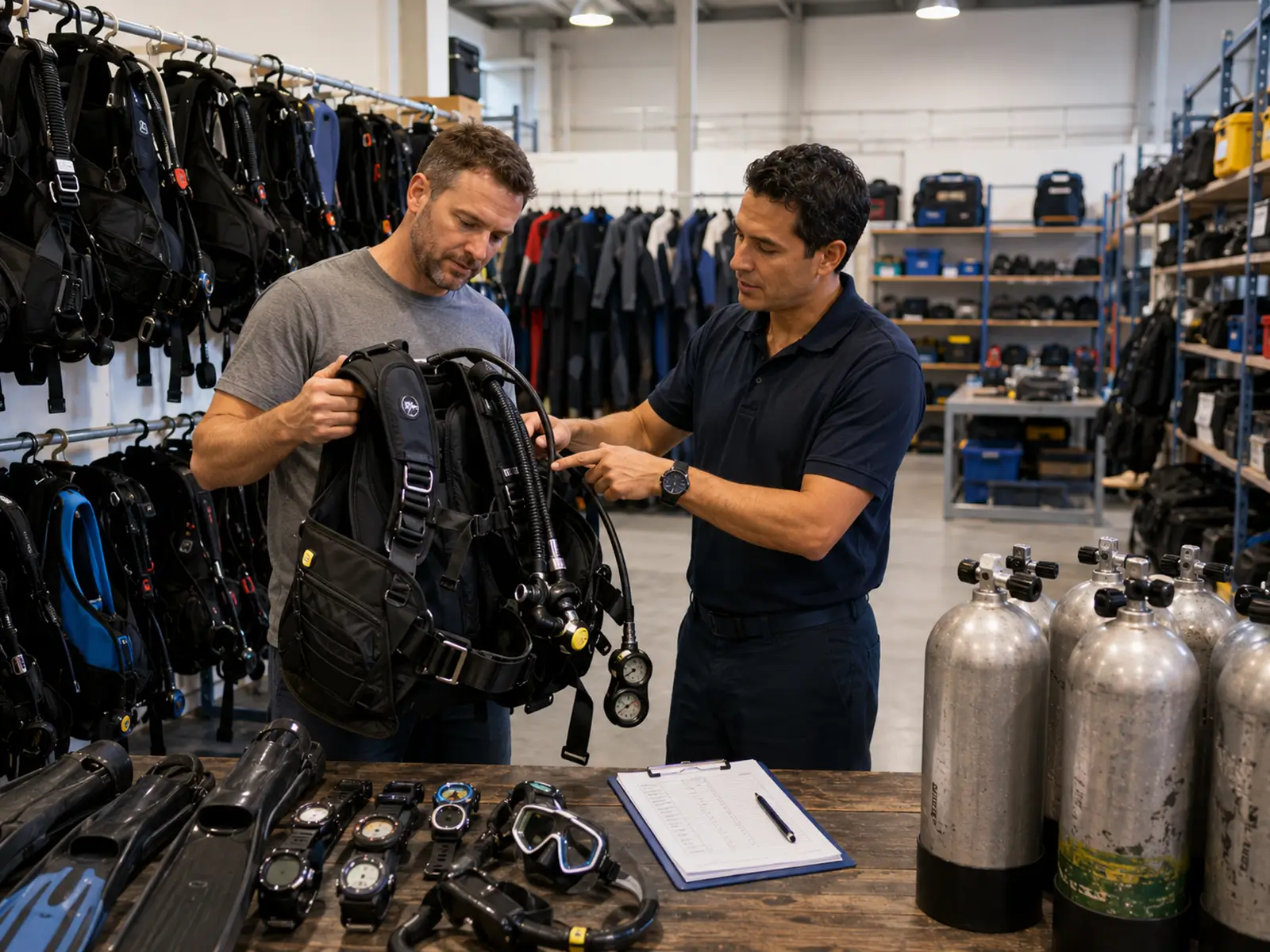
How to Buy Used Dive Equipment for a Dive Business
Buying used dive equipment can be a smart way to reduce startup costs or expand an existing scuba business.
A complete set of new rental gear can be expensive, especially for a dive center that needs multiple sizes, several regulators, BCDs, wetsuits, tanks, weights, masks, fins, computers and training equipment.
Used equipment can help buyers save money, but only when it is safe, serviceable and suitable for commercial use.
A cheap set of gear is not a good deal if it needs immediate servicing, has missing parts, cannot be supported by local technicians or creates a poor customer experience.
On "Dive Listings", buyers can compare professional scuba equipment, dive centers, boats and other dive business opportunities. This guide explains what to check before buying used dive equipment for a business.
If you are buying a full scuba operation, start with "how to buy a dive center". This article focuses only on used equipment.
1. Know What You Are Buying
Before discussing price, create a clear equipment list.
Used dive equipment is often sold as a package, but packages can be confusing. A seller may describe the lot as “complete rental gear”, but the buyer needs to know exactly what is included.
Ask for a written inventory showing:
- Regulators
- BCDs
- Wetsuits
- Tanks
- Masks
- Fins
- Boots
- Weights
- Weight belts
- Dive computers
- SMBs
- Compasses
- Training equipment
- Spare parts
- Storage boxes
- Repair tools
The list should include sizes, brands, models, quantities and condition.
Do not rely only on group photos. A pile of equipment can look valuable, but the real value depends on age, service history, completeness and whether the sizes match your customer base.
2. Separate Professional Gear From Personal Gear
Not all scuba equipment is suitable for business use.
Personal equipment may be fine for one diver, but rental and training gear needs to handle repeated use by different customers.
For a dive business, equipment should be:
- Durable
- Easy to clean
- Easy to adjust
- Easy to service
- Available in practical sizes
- Suitable for beginners
- Supported by local technicians
- Comfortable for frequent rental use
A high-end personal BCD or regulator may not be the best choice for rental operations if it is complex, fragile, expensive to service or difficult for beginners.
For business use, simple, reliable and serviceable equipment is often more valuable than premium gear with limited practical use.
3. Check the Condition of Regulators
Regulators are one of the most important items to inspect carefully.
A used regulator may look clean outside but still need internal service, replacement parts or testing.
Ask for:
- Brand and model
- Age
- Service history
- Last service date
- Number of first stages
- Number of second stages
- Octopus condition
- Hose condition
- Mouthpiece condition
- SPG condition
- DIN or yoke configuration
- Any known leaks or breathing issues
Regulators used in rental fleets should be reliable, simple to maintain and supported by local service technicians.
Avoid buying regulators if parts are hard to find, service history is missing or the seller cannot explain their condition clearly.
Always budget for inspection and service after purchase. Even when the seller says the regulators are working, commercial use requires confidence.
4. Inspect BCDs Carefully
BCDs are used heavily in rental fleets and can hide problems.
Check each BCD for:
- Bladder leaks
- Inflator function
- Dump valves
- Shoulder straps
- Cummerbund condition
- Buckles
- Integrated weight pockets
- Zippers
- Stitching
- D-rings
- Backplate or backpack condition
- Size labels
- General wear
Inflate the BCD and let it sit. A slow leak may not be obvious immediately.
For a dive business, sizing is very important. A package with many BCDs in sizes that do not match your customers may be less useful than it looks.
A balanced rental fleet usually needs practical sizes across the range, not only small or extra-large units.

5. Be Careful With Wetsuits
Used wetsuits can be useful, but they lose value quickly.
Wetsuits wear out, compress, smell, tear and lose warmth over time. They are also very size-sensitive.
Check:
- Thickness
- Size
- Zipper condition
- Seams
- Tears
- Knee pad wear
- Neck and wrist condition
- Odor
- Neoprene compression
- Repairs
- Overall flexibility
A wetsuit may still look acceptable but provide poor warmth or comfort.
For rental use, wetsuits should be clean, presentable and comfortable enough for customers. Poor wetsuits can damage reviews, especially with beginners.
Do not overvalue old wetsuits in a package. They may help temporarily, but buyers should often plan to replace part of the wetsuit fleet sooner than other equipment.
6. Check Tanks and Inspection Dates
Scuba tanks can be valuable, but they must be inspected carefully.
Important details include:
- Tank material
- Capacity
- Working pressure
- Manufacture date
- Hydrostatic test date
- Visual inspection date
- Valve type
- Valve condition
- Thread type
- Exterior corrosion
- Interior condition
- Neck markings
- Any repair history
Rules for tank inspections vary by country, but every buyer should know whether the tanks are current, expired or close to needing testing.
Expired tanks are not automatically worthless, but they may require immediate inspection costs.
Also check whether local filling stations accept the tank type and valve configuration.
A large number of tanks may look attractive, but if many are expired, damaged or unsuitable for your operation, the value is lower.
7. Dive Computers Need Extra Attention
Used dive computers can be useful for rental, training or guided dives, but they should be checked carefully.
Look at:
- Brand and model
- Battery condition
- Display condition
- Buttons
- Strap condition
- Algorithm type
- Nitrox compatibility
- Download function
- User settings
- Service history
- Water damage signs
- Availability of manuals
- Ease of use for beginners
For rental or training use, simple and reliable computers are usually better than complex models that customers may not understand.
Also check whether replacement straps, batteries or service support are available.
A cheap used computer may not be useful if the model is outdated, difficult to operate or unreliable.
8. Masks, Fins and Boots Have Practical Value
Masks, fins and boots are lower-value items individually, but they matter for customer comfort.
Check:
- Mask skirt condition
- Strap condition
- Lens scratches
- Fin blade condition
- Fin straps
- Buckles
- Boot soles
- Zippers
- Size range
- Cleanliness
- Odor
- General presentation
For a dive business, sizing is important.
A package with many fins in the wrong sizes may not help much. Boots that are heavily worn or unpleasant to wear may need immediate replacement.
These items may not carry the same safety risk as regulators or tanks, but they affect customer experience.
Comfortable rental gear can improve reviews and reduce complaints.
9. Check Completeness of Sets
Used dive equipment is often more valuable when it can be organized into complete working sets.
A useful rental set may include:
- BCD
- Regulator
- Octopus
- SPG
- Wetsuit
- Mask
- Fins
- Boots
- Weights
- Tank
If the seller has many random items but few complete sets, the package may be less useful than it seems.
Before buying, count how many full customer sets you can realistically build.
For example, a package may include 20 BCDs and 20 regulators, but only 8 wetsuits in usable sizes. In that case, the practical rental capacity may be much lower than the headline quantity suggests.
Think in working sets, not only item counts.
10. Brand Support and Spare Parts Matter
For business use, serviceability is essential.
Before buying used gear, check whether local technicians can service the brands and models included.
This is especially important for:
- Regulators
- BCD inflators
- Tank valves
- Dive computers
- Dry suits, if included
- Compressors, although these should be reviewed separately
Ask:
- Are service kits available?
- Are spare parts easy to source?
- Is there a local authorized technician?
- Are parts expensive?
- Is the model discontinued?
- Are manuals available?
- Can staff maintain basic parts safely?
Used equipment from unsupported brands can become a problem.
Even good-quality gear may lose business value if it cannot be serviced reliably in your destination.
11. Understand Rental Fleet Balance
A rental fleet should match the customers the business serves.
Before buying a large used equipment package, think about your customer profile.
For example:
- Beginner-focused centers need easy-to-use gear
- Family markets need smaller sizes
- Cold-water destinations need thicker wetsuits or dry suits
- Tropical destinations may need lighter wetsuits
- Technical diving operators need more specialized equipment
- Snorkeling-heavy businesses need masks, fins and wetsuits in larger quantities
A good package for one business may be wrong for another.
Do not buy simply because the lot is large. Buy because the equipment fits your market.
12. Estimate Immediate Service Costs
Used equipment almost always needs some level of inspection, cleaning or servicing.
Before agreeing on price, estimate immediate costs such as:
- Regulator servicing
- BCD leak checks
- Inflator repairs
- Tank inspections
- Valve servicing
- Computer batteries
- Wetsuit replacement
- Fin strap replacement
- Mask strap replacement
- Cleaning and disinfection
- Missing parts
- Transport
These costs should reduce the value of the package.
A seller may price equipment based on what it cost new. A buyer should price it based on what it is worth after making it safe, clean and ready for business use.
13. Check Hygiene and Presentation
Rental equipment must look and feel acceptable to customers.
Even if equipment is technically usable, it may not be suitable for a professional dive business if it looks dirty, smells bad or feels old.
Check:
- Odor
- Mold
- Salt damage
- Storage condition
- Rust
- Dirt
- Stains
- General presentation
- Cleanliness of wetsuits and boots
- Storage boxes or racks
Customers judge a dive business quickly by the condition of its gear.
Poorly presented equipment can reduce trust, even before the dive begins.
A clean, organized rental fleet supports a professional image.
14. Ask Why the Equipment Is Being Sold
The reason for sale matters.
Used dive equipment may be sold because:
- A dive center is closing
- A business is upgrading
- A fleet is being replaced
- The owner is retiring
- Equipment is surplus
- The business changed its model
- The gear is old or difficult to maintain
A normal upgrade or business closure can be a good buying opportunity.
But be careful if the seller is vague, avoids inspection or refuses to provide details.
Ask direct questions:
- Why is the equipment being sold?
- Was it used commercially?
- When was it last used?
- Has anything failed recently?
- Are any items known to need repair?
- Are service records available?
- Can the equipment be inspected before purchase?
Clear answers build confidence.
15. Avoid Overpaying for Old Equipment
Used dive equipment loses value over time.
Do not calculate value only from original purchase price.
Consider:
- Age
- Condition
- Service history
- Remaining useful life
- Replacement cost
- Immediate repair cost
- Brand support
- Demand for the item
- Quantity of usable sizes
- Commercial suitability
A seller may say the equipment cost 50,000 USD new. That does not mean it is worth close to that today.
For business buyers, the real value is based on how much useful, safe and rentable life remains.
16. Transport and Import Costs
If the equipment is in another region or country, transport can change the deal.
Used dive equipment can be bulky and heavy.
Consider:
- Shipping cost
- Customs duties
- Import taxes
- Packing
- Insurance during transport
- Delivery time
- Risk of damage
- Local import rules
- Cost of returning unusable items
Buying locally may be more expensive at first but easier to inspect, transport and service.
Buying internationally may offer better pricing, but only if the total landed cost still makes sense.
This is especially important when buying large packages of tanks, wetsuits or BCDs.
 |
17. When Used Equipment Is a Good Deal
Used dive equipment can be a good purchase when:
- The inventory is clear
- Service history is available
- The gear is clean and organized
- Brands are serviceable locally
- Sizes match your customer base
- Tanks are current or close to current
- Regulators can be serviced easily
- BCDs hold air properly
- Wetsuits are still presentable
- The price reflects age and condition
- Immediate repair costs are realistic
A good used equipment deal should reduce startup cost without creating major safety or customer service problems.
18. When to Walk Away
Sometimes the best decision is not to buy.
Be cautious when:
- The seller cannot provide a clear inventory
- Regulators have no service history
- Tanks are expired or damaged
- BCDs leak
- Wetsuits are heavily worn
- Brands are unsupported locally
- Items are incomplete
- The package is mostly unusable sizes
- The seller refuses inspection
- The price is based on original purchase cost
- Transport costs are too high
- The gear looks poorly stored or neglected
Cheap equipment is not cheap if it creates problems immediately after purchase.
A professional dive business should never build its customer experience around unsafe or unreliable gear.
Final Thoughts
Buying used dive equipment can be a practical way to reduce costs and build a rental or training fleet.
But buyers need to inspect carefully.
The value of used scuba gear depends on condition, age, service history, brand support, completeness, sizing, hygiene, transport cost and suitability for commercial use.
Regulators, BCDs, tanks and dive computers need special attention because inspection, service and safety matter. Wetsuits, masks, fins and boots may seem simpler, but they still affect customer comfort and business reputation.
A good used equipment package should be safe, clean, serviceable and useful for the type of customers the business serves.
The best deal is not the cheapest pile of gear.
It is the equipment that can realistically support a professional dive business after proper inspection and servicing.
Next Steps for Buyers
Before buying, compare the equipment list with your real business model and customer profile.
If you are preparing to sell your own gear, read "sell dive equipment".
To understand how rental gear affects business value, review "dive equipment rental fleet".
For a separate guide on air systems, read "compressors and fill stations".
If you are buying a full scuba operation, start with "how to buy a dive center".
If you are ready to compare opportunities, browse current "dive equipment for sale" on "Dive Listings".
You can also explore more guides in our "Dive Equipment Business" section.