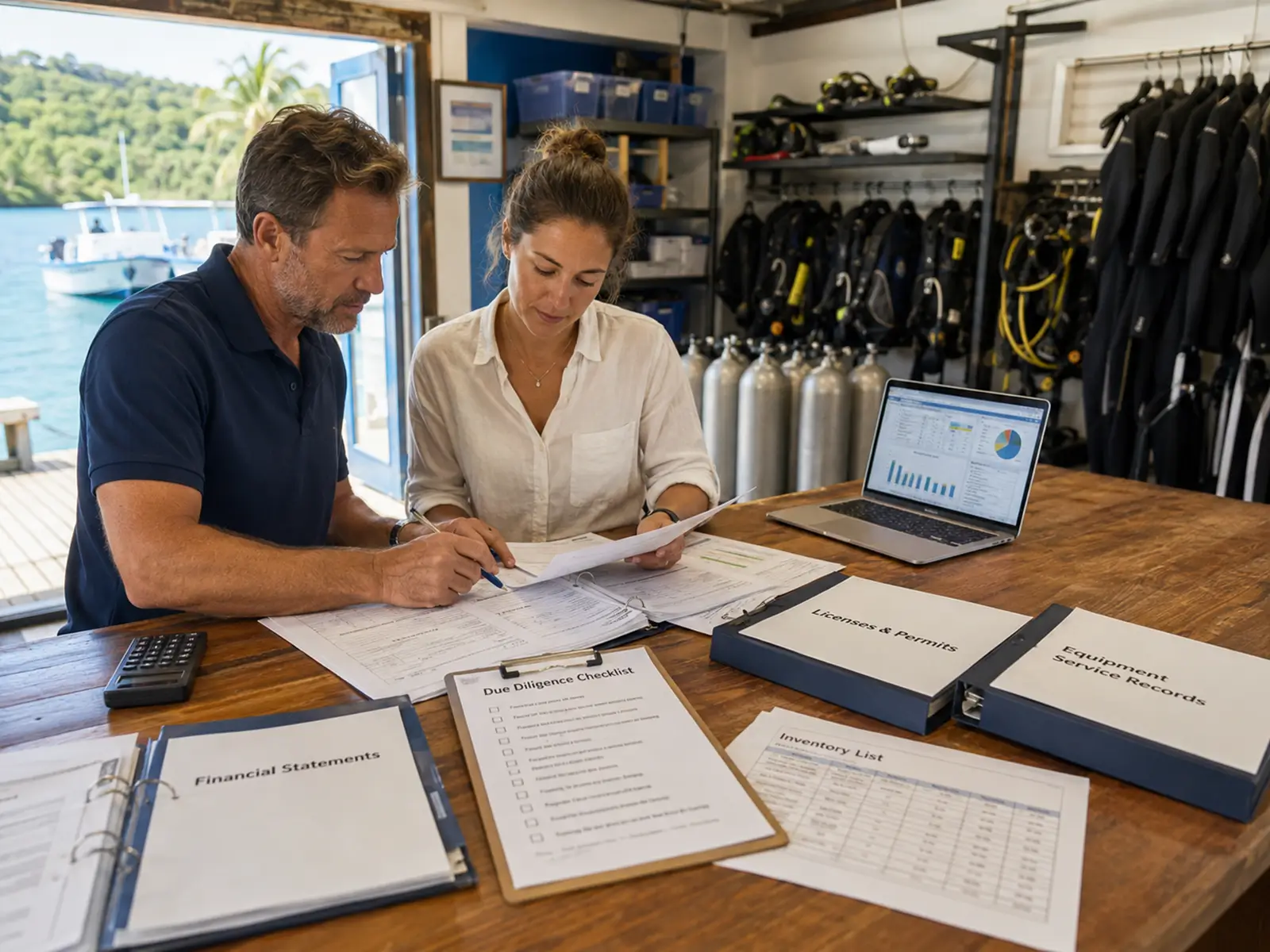
Buying a Turnkey Dive Business: What Buyers Should Know
A turnkey dive business sounds simple: you buy it, take the keys and start operating.
For many buyers, this is exactly the appeal. Instead of building a dive center from zero, you take over an existing operation with equipment, customers, staff, systems, reviews and local presence already in place.
On "Dive Listings", many buyers are looking for this type of opportunity because they want a business that is already running, not just an empty shop, an idea or a future project.
But the word “turnkey” can mean different things to different sellers.
In some cases, a turnkey dive business is truly ready to operate. In others, it may still need new equipment, legal updates, staff changes, marketing work, repairs or additional investment after the purchase.
Before buying, you need to understand what “turnkey” really means in that specific listing.
If you are still at the beginning of the process, start with our full guide on "how to buy a dive center". This article focuses only on turnkey dive businesses and what buyers should check before taking over.
1. What Does “Turnkey Dive Business” Really Mean?
A turnkey dive business should normally mean that the buyer can take over the operation and continue running it without building everything from scratch.
In a strong turnkey opportunity, the business may already include:
- Operating location
- Rental dive equipment
- Tanks and compressor
- Boat or access to dive sites
- Existing customer base
- Trained staff or instructors
- Website and domain
- Booking system
- Social media accounts
- Online reviews
- Local partnerships
- Supplier contacts
- Licenses or permits
- Handover support from the seller
But buyers should be careful. “Turnkey” does not automatically mean that everything is perfect.
It does not always mean the business is highly profitable. It does not always mean licenses are transferable. It does not always mean the equipment is in good condition. It does not always mean staff will stay after the sale.
The first question should be simple:
What exactly is included in the turnkey package?
If the seller cannot answer clearly, the listing may not be as turnkey as it sounds.
2. A Turnkey Business Should Already Be Operating
A real turnkey dive business should normally have active operations or be ready to restart quickly.
That means the buyer should be able to see how the business works in practice.
Ask whether the business is currently:
- Open and trading
- Temporarily closed
- Seasonal
- Recently closed
- Operating under reduced activity
- Waiting for a new owner to restart
There is a big difference between a dive center that is actively serving customers and one that has been closed for a year.
A business that is still operating may have current staff, active reviews, recent revenue and working systems. A closed business may still have value, but it may require more effort to rebuild customer flow, staff structure and local trust.
If the seller says it is turnkey, ask:
Can this business operate tomorrow under a new owner?
If the answer is no, you need to understand what is missing.
 |
3. The Asset List Must Be Clear
The asset list is one of the most important parts of any turnkey dive business sale.
Do not rely on photos or general descriptions. Ask for a written list of what is included.
This should cover:
- Regulators
- BCDs
- Wetsuits
- Tanks
- Compressor
- Oxygen equipment
- First aid kits
- Boats
- Engines
- Vehicles
- Retail stock
- Tools
- Office equipment
- Furniture
- Website
- Domain name
- Booking system
- Brand name
- Logo
- Social media accounts
- Customer database
- Training materials
- Supplier contacts
Also ask what is not included.
Sometimes the most important parts of the business are not part of the sale. The boat may belong to the owner personally. The premises may be rented. The compressor may be leased. The domain may be registered outside the company. The customer database may not be transferable.
A turnkey business is only turnkey if the key assets are actually included and can legally be transferred.
4. Check Whether Licenses Can Transfer
Licenses and permits are critical in a dive business.
A seller may describe the business as turnkey because it has been operating for years. But that does not automatically mean the buyer can continue operating under the same permissions.
Depending on the country or region, you may need to check:
- Business license
- Tourism activity license
- Dive operation permit
- Boat permissions
- Marina or harbor permits
- Compressor inspection documents
- Insurance policies
- Environmental permits
- Staff qualification requirements
The key question is not only whether the business has licenses today.
The real question is:
Can the new owner legally use or transfer them after the sale?
If the permits are connected to the current owner personally, the company structure, a local qualification or a specific lease, the buyer may need to reapply.
This is especially important when "buying a dive business abroad", where local rules, language and administration may be unfamiliar.
Before paying a deposit, speak with a local lawyer or advisor who understands business transfers in that location.
5. Staff Can Make or Break a Turnkey Sale
A turnkey dive business is much easier to take over if the right people stay after the sale.
A dive center may look complete on paper, but if the instructors, manager, skipper or front-desk person leave, the new owner may suddenly have a staffing problem.
Ask:
- Who currently works in the business?
- Will they stay after the sale?
- Are they employees or freelancers?
- What languages do they speak?
- What certifications do they hold?
- Who manages bookings?
- Who knows the local dive sites?
- Who handles equipment maintenance?
- Who manages hotel or agency relationships?
If the business depends heavily on the current owner, be careful.
For example, if the seller teaches courses, drives the boat, handles marketing, manages staff and knows every local partner personally, the business may be less turnkey than it appears.
A good turnkey opportunity should have either a stable team or a clear handover plan.
 |
6. Existing Systems Are Part of the Value
One of the biggest advantages of buying a turnkey dive business is that systems may already be in place.
These can include:
- Booking process
- Customer forms
- Payment process
- Course scheduling
- Equipment rental process
- Daily dive trip planning
- Staff rota
- Safety procedures
- Emergency procedures
- Maintenance schedule
- Supplier ordering
- Customer communication templates
- Review collection process
These systems may not look as exciting as boats or equipment, but they are very important.
A dive center with clear procedures is easier to take over than one where everything exists only in the owner’s head.
Ask the seller to show how a normal booking is handled from first customer message to completed dive.
That simple walkthrough can tell you a lot about how organized the business really is.
7. Online Assets Must Be Transferable
A modern dive business depends heavily on its online presence.
For a turnkey sale, digital assets should be clean, active and transferable.
Check:
- Website ownership
- Domain ownership
- Hosting access
- Business email accounts
- Google Business Profile
- Social media accounts
- Online booking profiles
- Advertising accounts
- Customer database
- Newsletter list
- Photos and videos
A business with good reviews, strong Google visibility and a working booking system may be much more valuable than a business that only has equipment.
But digital assets can also create problems.
Be careful if:
- The domain is owned by someone else
- The website cannot be edited
- The Google profile is linked to an old employee
- Social media passwords are missing
- Reviews belong to a different legal entity
- Customer data cannot be transferred legally
Make digital access part of the handover plan, not an afterthought.
8. Turnkey Does Not Mean No Investment
Many buyers assume that turnkey means they will not need to spend more money after the purchase.
That is often wrong.
Even a good turnkey dive business may need investment in the first year.
Possible post-purchase costs include:
- Equipment replacement
- Compressor service
- Tank inspections
- Boat repairs
- Website improvements
- New photos or videos
- Marketing campaigns
- Legal fees
- Accounting fees
- Staff training
- Rebranding
- Insurance updates
- Working capital for low season
Before making an offer, calculate the real total investment.
The asking price is only one part of the cost. You also need enough money to operate confidently after takeover.
For a deeper breakdown, read our guide to "dive center buying costs" before deciding whether the price is realistic.
9. The Handover Should Be Written Down
A turnkey business needs a strong handover.
Without a proper handover, the buyer may receive the keys but not the knowledge needed to run the operation.
A good handover may include:
- Staff introductions
- Partner introductions
- Supplier introductions
- Booking system training
- Website and social media access
- Equipment maintenance schedule
- Compressor procedures
- Boat procedures
- Safety procedures
- Customer communication templates
- Explanation of local seasonality
- Support period after the sale
Do not leave this vague.
Agree how long the seller will support the transition, what they will help with and whether they will be available after completion.
If the seller wants to disappear immediately after payment, ask why.
A real turnkey sale should include a practical transfer of knowledge.
10. Questions to Ask Before Buying
Before buying a turnkey dive business, ask the seller direct questions:
- What exactly is included in the sale?
- What is excluded?
- Is the business currently operating?
- Can the licenses transfer to the buyer?
- Will staff stay after the sale?
- Is the lease transferable?
- Are boats, vehicles and compressor included?
- Are there any loans or finance agreements?
- Who owns the website and domain?
- Can digital accounts be transferred?
- What investment is needed in the next 12 months?
- What are the biggest risks?
- What support will the seller provide during handover?
Good answers do not need to be perfect, but they should be clear.
If the answers are vague, slow or inconsistent, take more time before making an offer.
Final Thoughts
A turnkey dive business can be a strong opportunity for buyers who want to enter the scuba industry without starting from zero.
The main advantage is speed. You may be able to take over an existing location, equipment, staff, systems, customers, reviews and local reputation.
But “turnkey” should never be accepted as a marketing phrase only.
Buyers should check exactly what is included, what is transferable, what still needs investment and how the handover will work.
The best turnkey dive business is not just one that looks ready in photos. It is one that can legally, practically and financially continue operating under the new owner.
If the assets, licenses, staff, systems, online presence and handover are strong, a turnkey dive business can save time and reduce startup risk.
If those elements are weak or unclear, it may not be truly turnkey at all.
Next Steps for Buyers
If you are still learning the buying process, start with our full guide on "how to buy a dive center".
If you are ready to compare real opportunities, browse current "dive centers for sale" on "Dive Listings".
Before making an offer, calculate the full "dive center buying costs", including post-purchase investment and working capital.
You can also explore more guides in our "Buying a Dive Business" section.
 |